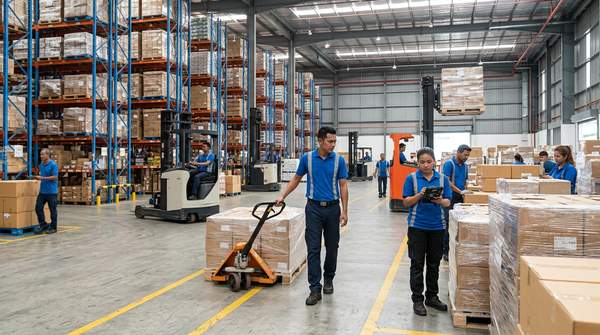
An AI assistant may be the most visible face of enterprise artificial intelligence, but much of an organization’s work happens elsewhere. Tasks move through recurring workflows, information passes between systems, teams rely on reports, and routine processes have to keep moving whether anyone is thinking about AI or not.
That operating environment is where Kaymax LLC places much of its attention. Through Kaymax AI, the veteran-founded technology company brings automation, intelligent assistants, custom software, data analysis, workflow optimization, and enterprise integration into the same picture, guided by a human-centered principle that AI should augment human capability.
AI Needs a Job Inside the Operation
For an organization already running on established processes and software, adding AI is rarely a blank-slate exercise. The useful question is where it can participate in work that already has a sequence, an owner, and an expected result.
Kaymax AI approaches enterprise AI from that operational perspective. Its architecture combines AI language models, workflow automation engines, and enterprise integration capabilities, creating several ways to apply AI according to the task rather than forcing every need through the same interface.
An intelligent assistant may support interaction with information. Automation can handle repeatable workflow steps. Analytics can work with operational data, while integrations connect these functions with existing business systems. Kaymax AI is also designed so organizations can deploy AI-powered tools without requiring extensive in-house AI expertise.
Automation Belongs Where Work Repeats
Many business processes contain predictable sequences. Information is entered, routed, checked, updated, or passed to another stage, often through the same steps every time the process runs.
Kaymax AI includes configurable, AI-powered business automation along with workflow automation and optimization for these recurring patterns. The aim is to put automation inside the work itself, where software can participate in repeatable processes rather than becoming one more separate tool employees have to remember to use.
The workflow remains the starting point. What triggers the process? Which actions repeat? Where does information move? What has to happen before the next person or system can continue? Those questions give automation a defined operational role instead of treating it as a feature looking for somewhere to land.
Intelligent Assistants Handle a Different Kind of Work
Intelligent assistants address another part of the operating environment. Where automation can manage defined actions and sequences, an AI assistant provides a conversational way to interact with information, software, or business tasks.
Kaymax AI includes intelligent AI assistants alongside its automation capabilities. An assistant can therefore act as one point of interaction within a larger system while workflows, software, data, and integrations continue working behind it.
The conversation on the screen may be the most obvious part of the experience, but its usefulness depends on what it can work with, what information it can access, and what operational processes surround it. This keeps the assistant in proportion to the wider system rather than letting it stand in for the whole AI strategy.
Data Gives AI Business Context
Every operational system produces information. Transactions, workflow activity, reports, and routine processes leave behind data that teams may need to review, interpret, or act on.
Kaymax AI includes data analysis and reporting as part of its enterprise capabilities. That extends AI beyond conversation and task automation into another familiar business requirement: making operational information easier to work with.
The connection among these capabilities is where the platform becomes more useful. A workflow can generate information, reporting can organize it, and analysis can support the people deciding what deserves attention or what action should follow.
Enterprise Integration Keeps Existing Systems in the Picture
Organizations considering AI usually already depend on software for operations, communication, reporting, recordkeeping, and other business functions. Any new technology therefore enters an environment with existing systems, established workflows, and technical requirements.
Integration with enterprise systems is one of Kaymax AI’s core capabilities. Its architecture combines AI language models, workflow automation engines, and enterprise integration technology, with compatibility for existing business systems and compliance requirements.
Kaymax AI is also designed around security and scalability. Within an enterprise setting, those architectural priorities support a platform intended to operate alongside established software and accommodate changing operational demands rather than functioning as an isolated AI experiment.
Custom Software Adds Room for Different Operational Needs
No two organizations arrange their work in exactly the same way. Processes, software environments, reporting needs, and internal requirements can differ substantially even when two organizations operate in the same sector.
Kaymax AI includes custom software solutions alongside automation, intelligent assistants, analytics, and enterprise integration. This gives Kaymax LLC another route when an operational requirement calls for software built around a particular workflow or technology environment.
That capability also connects the AI platform with Kaymax LLC’s wider technical background in software engineering, cloud applications, enterprise software, web and mobile development, operational analytics, and automation. AI sits inside a larger software practice rather than carrying the entire offer by itself.
Human-Centered AI Changes the Starting Question
Kaymax LLC describes human-centered AI through a straightforward principle: artificial intelligence should augment human capability. In business operations, that shifts attention toward the relationship between the technology and the people responsible for managing processes, reviewing information, making decisions, and completing the work.
The philosophy fits the structure of Kaymax AI. Automation has one job, intelligent assistants another, analytics another, and integrations another. Each capability can support part of the operation without requiring people to disappear from the process.
That creates a more grounded way to evaluate AI. An automation should handle a process worth automating. An assistant should support a real task. Analytics should make relevant operational information more usable, and an integration should connect systems that actually need to work together.
Enterprise AI Can Become Part of the Working System
Kaymax AI presents enterprise AI as a set of capabilities that can work across business operations rather than as a single tool. Automation, intelligent assistants, analytics, custom software, and integrations each address a different part of the operating environment.
For organizations with established processes, that provides a practical starting point. Instead of asking where an AI product can be inserted, teams can look at the workflows, systems, information needs, and recurring tasks already demanding attention.
That is where Kaymax LLC’s human-centered approach becomes concrete. AI earns its place through the work it supports, while the people, software, and responsibilities surrounding that work remain part of the system.
Frequently Asked Questions
What is human-centered AI at Kaymax LLC?
Human-centered AI at Kaymax LLC is based on the principle that artificial intelligence should augment human capability. In business operations, that can mean using automation, intelligent assistants, analytics, custom software, and integrations to support the people responsible for managing work and making decisions.
What can Kaymax AI automate?
Kaymax LLC includes configurable, AI-powered business automation and workflow automation and optimization within Kaymax AI. These capabilities are intended for operational processes where repeatable tasks and defined workflow steps can be handled through software.
Can Kaymax AI integrate with existing enterprise systems?
Yes. Kaymax LLC includes enterprise-system integration among Kaymax AI’s core capabilities. Its architecture combines AI language models, workflow automation engines, and enterprise integration technology with compatibility for existing business systems and compliance requirements.
Does Kaymax AI include more than intelligent assistants?
Yes. Kaymax LLC’s Kaymax AI offering also includes business automation, custom software solutions, workflow optimization, data analysis and reporting, and enterprise-system integration. Intelligent assistants are one component within a wider enterprise AI platform.
Kaymax LLC’s human-centered approach gives enterprise AI a practical place inside business operations. The technology has a defined job, whether that means automating recurring work, supporting a team through an intelligent assistant, working with operational data, or connecting with an existing system.
If you’re interested in seeing how Kaymax LLC brings those capabilities together, check out Kaymax AI.